
Workforce Development
Economic Development
In a rural county, economic development that leans on recruitment alone does not work. Recruitment gets the headlines. Business retention and expansion gets the results. Adams County’s existing employers have local roots, they employ locally, they pay local taxes, and they sponsor the youth sports teams, fund the scholarships, and organize the community events that make these towns places people want to stay. Keeping and growing what we already have is cheaper, faster, and more durable than chasing what we do not. That is where ACDC puts its weight, and workforce is the reason why.
Ask any employer in Adams County what stands between them and their next expansion and you will hear the same answer. Workforce. Workforce shortages are not unique to rural communities, but the rural version has a distinct cause: our educated youth leave for urban centers and do not come back. Every graduating class thins the pool of people available to fill the jobs our employers are trying to create here. That cycle compounds, and it does not fix itself.
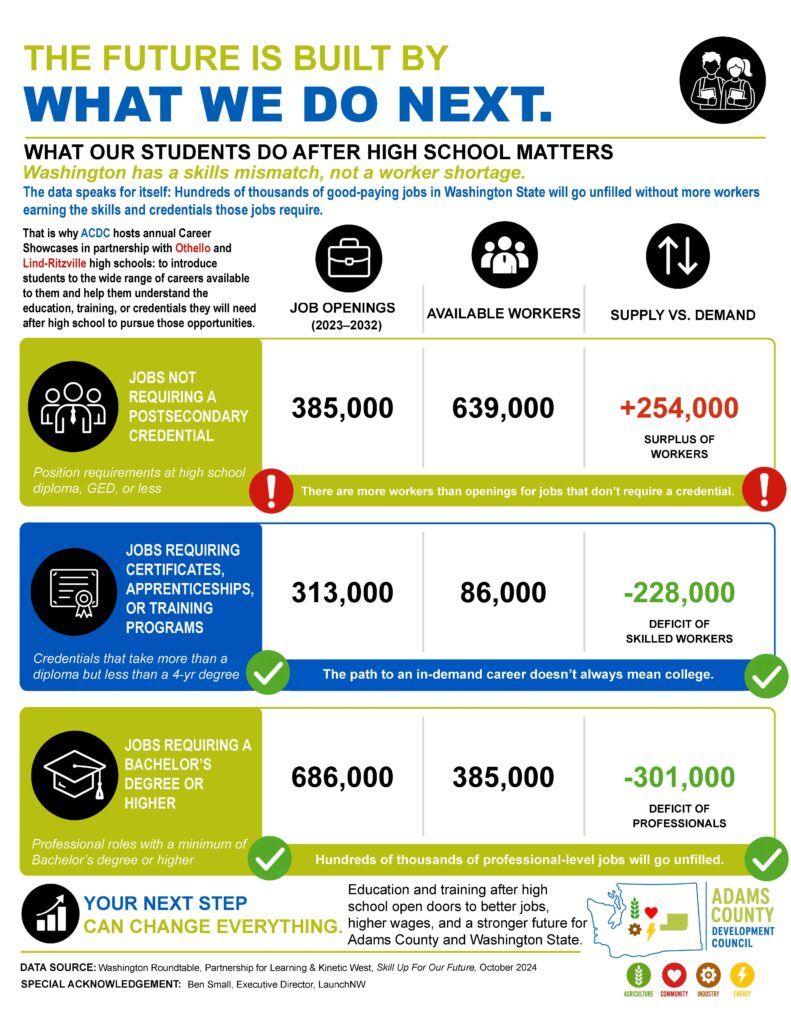
Washington State has a skills mismatch, not a worker shortage.
Between 2023 and 2032, Washington expects 385,000 job openings requiring no credential beyond a high school diploma, with 639,000 workers available to fill them. That is a surplus of 254,000 people competing for the jobs that pay the least. Move one rung up the ladder and the picture inverts. Jobs requiring a certificate, an apprenticeship, or a training program will open 313,000 positions with only 86,000 qualified workers, a deficit of 228,000. Jobs requiring a bachelor’s degree or higher run a deficit of 301,000. The path to an in-demand career does not always run through a four-year degree, and hundreds of thousands of good-paying jobs in this state will go unfilled without more workers earning the credentials those jobs require.
Our answer is to solve the problem before it becomes a problem. That means building a workforce pipeline for Adams County employers out of Adams County students, and it means starting the conversation while those students are still in high school and still deciding what comes next. We engage them early, we engage them often, and we do it on their turf.
The Career Showcase
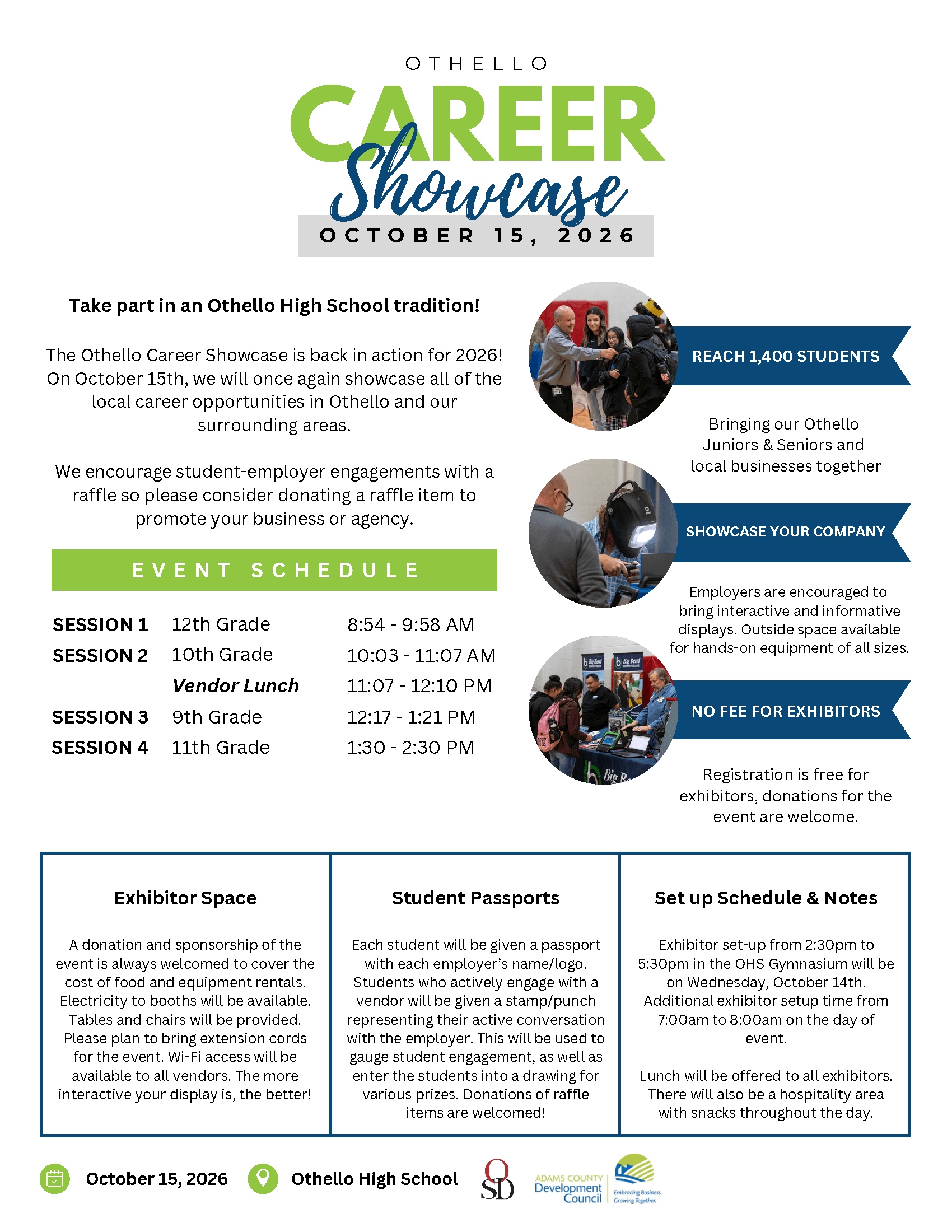
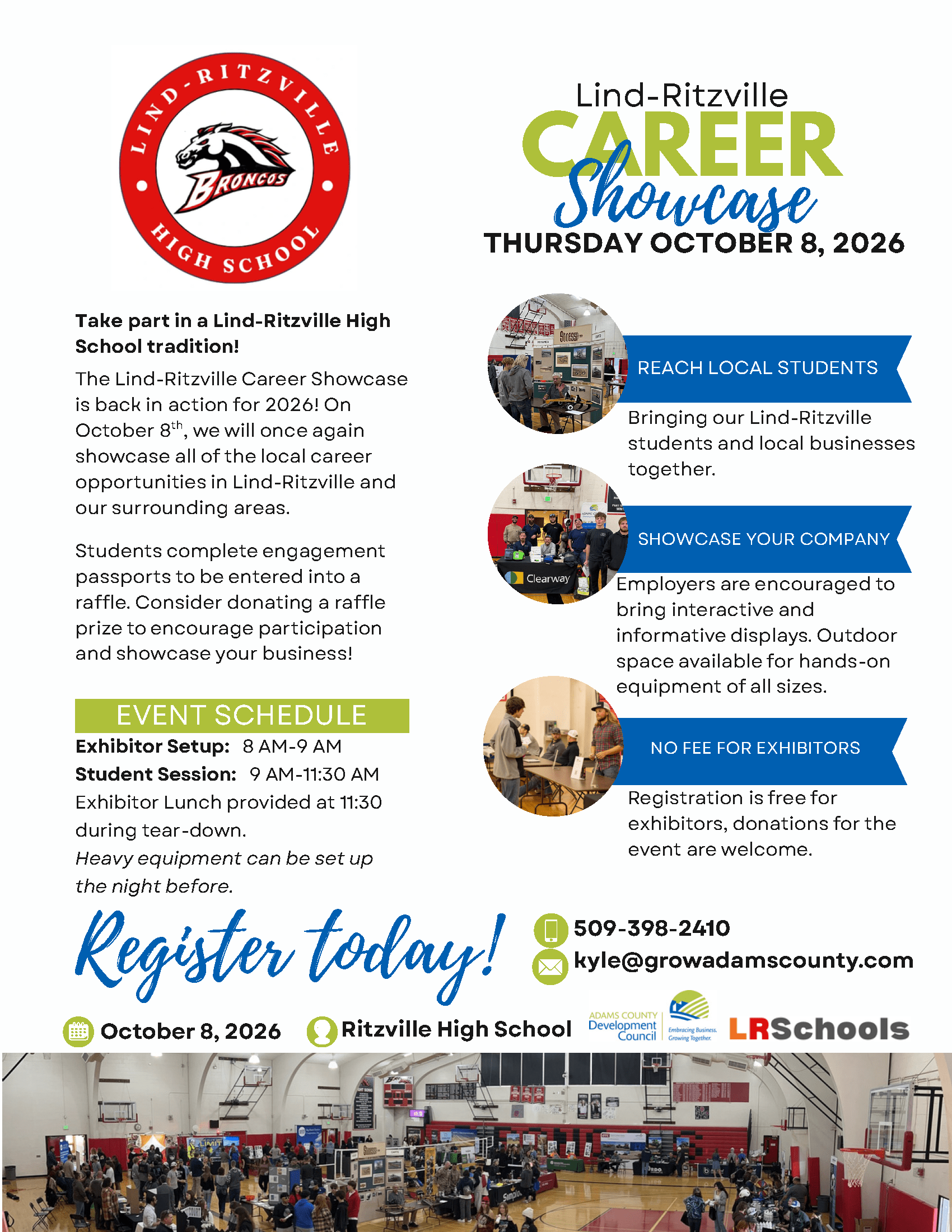
ACDC hosts two annual Career Showcases, one in Othello and one in Lind-Ritzville, each built with its own school district and its own community’s employers. Students spend the day on the showcase floor meeting the businesses that operate in their own towns and learning what education, training, or credential each career actually requires.
The Othello Career Showcase, hosted with the Othello School District, brings together more than 65 participating organizations and over 1,400 students in grades 9 through 12. The Lind-Ritzville Career Showcase, hosted with the Lind-Ritzville School District, brings together more than 40 organizations and 240 to 300 students, including students from neighboring Lincoln County schools in Harrington and Sprague.
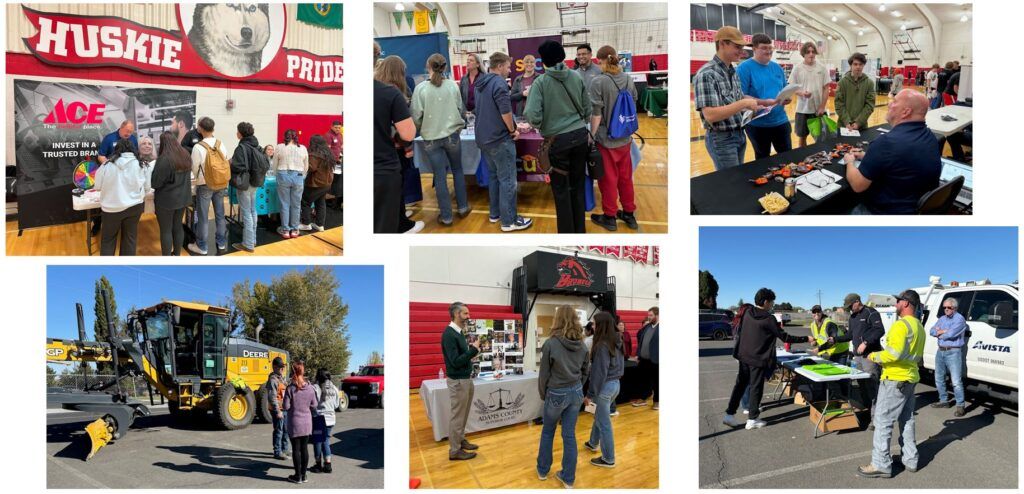
Every student carries a passport and collects a stamp from each exhibitor they visit before entering the door prize drawing at the end of the day. That system does real work. It moves a student from walking past a booth to standing in front of an employer and asking questions, which is the same skill they will use in every job interview ahead of them.
What comes out of it
For many of these students, the showcase is their first authentic, face-to-face interaction with a working employer, across a range of career clusters most of them have never encountered. Job shadow and internship placements coming out of showcase connections have reached an all-time high. Employers who spend a day on that floor walk away with names, and students walk away knowing that the company down the highway is hiring for jobs they did not know existed.
Participation is free for every employer, and it always has been. The showcase is as much a business retention and expansion tool as it is a student program. Every conversation on that floor tells us something about an employer’s hiring needs, their growth plans, and what they need to stay and expand in Adams County.
Where do you want to be when you grow up?
The age-old question “What do you want to be when you grow up?” needs a second question attached to it. Staying local does not mean limiting potential. Adams County students can enter the workforce here right after graduation, or they can go get a degree and bring it back to a career that is waiting for them. You do not have to leave Adams County. You can stay, return, and thrive.